
Carpet · Daly City
Carpet Installation in Daly City
Bedrooms, stairs, and rental turnovers across Daly City, Colma, and South San Francisco, power stretched so the carpet stays flat.
(650) 414-5793 — price my carpetThe Step That Separates Good Carpet Work From Bad
Carpet installation in Daly City looks simple from the outside and mostly is, with one exception that decides everything. Carpet has to be power stretched, not knee-kicked into place, or it will relax and ripple within a year or two no matter how good the material was. Flooring Installation Daly City uses a power stretcher on every job including small bedrooms, and that alone puts our work ahead of a meaningful share of what gets installed around the Peninsula. Beyond that, the fundamentals are honest and unglamorous: a quality pad rated for the traffic, fresh tack strip rather than whatever the last installer left, seams planned away from doorways and sightlines, and stairs wrapped or capped cleanly. Most of our carpet work is bedrooms and upstairs hallways, stairs in the two-level homes that fill this area, and turnover work for landlords who need a unit rent-ready fast.
What Carpet Installation Includes
Pad, tack strip, stairs, and disposal are quoted as separate lines so nothing is buried in a square-yard rate.
Old carpet, pad, and staple removal
Everything comes out, including the staples that hold the old pad down, because leaving them creates lumps you will feel through a new pad within weeks.
Fresh tack strip installation
New strip is fastened around the perimeter at the correct gully distance from the wall. Reusing old strip is a shortcut that leaves the carpet under-gripped at the very edges where it needs the most hold.
Subfloor inspection and squeak correction
With the old carpet off, loose subfloor panels get screwed down to the joists and soft spots get addressed. This is the one moment the subfloor is accessible, so we use it.
Pad selection matched to the carpet and the room
Density and thickness are chosen for the traffic and the carpet own specification. An over-thick pad under a low-pile carpet voids warranties and wears the carpet backing out early.
Pad installation, stapled and seamed
Pad is laid with seams offset from where the carpet seams will fall, stapled or glued on the perimeter, and taped at the joints so it cannot shift underfoot.
Seam planning and hot-melt seaming
Seams are placed to run with the light and away from doorways and main walking paths, then joined with seaming tape and an iron so the joint stays invisible and does not open.
Power stretching in both directions
The carpet is stretched wall to wall with a power stretcher, not a knee kicker alone. This is the step most directly responsible for a carpet that is still flat in year five.
Trimming and tucking at every edge
Carpet is trimmed to the wall and tucked into the gully behind the tack strip with a stair tool, giving a tight edge under the baseboard with no visible backing.
Stair installation, wrapped or capped
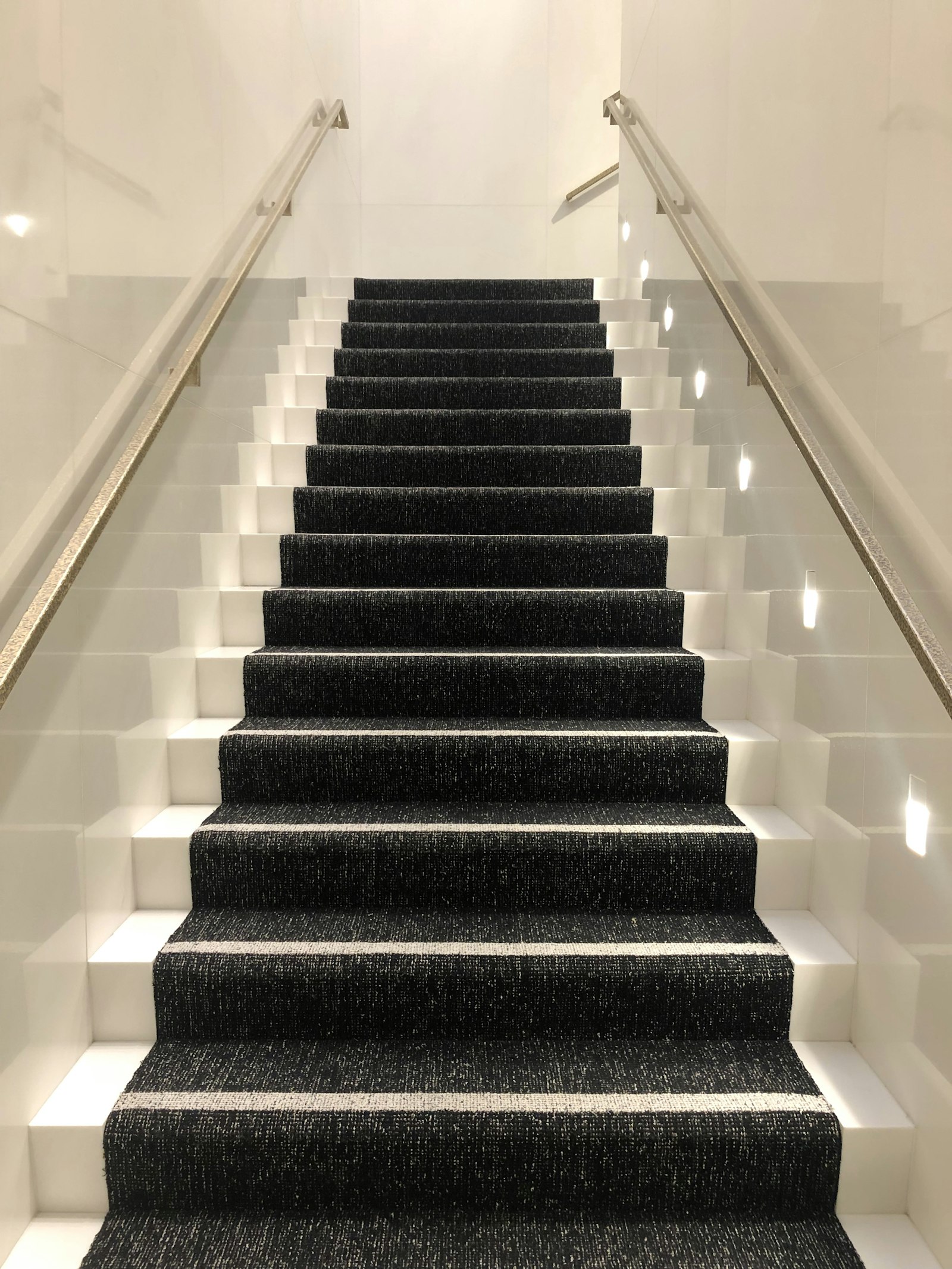
Treads and risers are wrapped for a continuous look or capped for a defined edge, stretched on each tread individually and fastened so nothing loosens at the nose.
Transitions at every threshold
Metal or wood transitions where carpet meets hard surface, set at the correct height so there is no trip edge and the carpet edge is protected.
Furniture moving and haul-away
Standard furniture is moved out and back, and the old carpet and pad leave on our truck the same day rather than sitting in your driveway.
Final vacuum and inspection
The new carpet is vacuumed, trimmings are collected, and we walk the rooms with you checking edges, seams, and stair noses.
How a Carpet Job Runs
- 01
Measurement and seam plan
We measure each room and draw the seam layout before quoting, because carpet comes in fixed widths and where the seams fall changes both the material count and how the finished floor looks. You get an itemized estimate covering carpet, pad, tack strip, labor, stairs, and disposal, usually the same day as the visit.
- 02
Tear-out and subfloor prep
Old carpet, pad, and staples come out, the subfloor gets inspected and screwed down where it squeaks, and fresh tack strip goes in around the perimeter. In a typical three-bedroom house this is a couple of hours.
- 03
Pad, carpet, stretch, and finish
Pad goes down, carpet is cut and seamed, then power stretched and tucked. Stairs are done individually and take longer per square foot than any open room. Most whole-house carpet jobs in this area finish in a single day, and the rooms are usable the same evening.
Why Hire Us for Carpet
Every job gets power stretched, including the small ones
It takes longer and it is the reason our carpet still looks tight years later. Crews that skip it on a single bedroom because it is only twelve by twelve are exactly why so many homeowners think carpet just wrinkles eventually.
Turnovers get a firm date
Property owners in Daly City, Colma, and South San Francisco use us between tenants because we schedule a finish day and hold it. A two-bedroom unit is usually one day from tear-out to final vacuum.
Stairs are treated as their own job
Stairs take the most abuse and show the most craft. Each tread is stretched and fastened individually and the nosings are formed cleanly, rather than running one loose piece down the flight and calling it done.
On every carpet job
- CSLB Licensed, Bonded & Insured (C-15)
- Power Stretched on Every Job
- New Pad and New Tack Strip Always
- Free In-Home Measurement
- Furniture Moved and Old Carpet Hauled Away
- Written Workmanship Warranty
Get Your Carpet Measured and Quoted
Carpet is the fastest floor in this catalog to install and the easiest one to get subtly wrong, and the difference is almost entirely in the stretch and the seams. We will measure, plan the seam layout, and quote the pad and stairs as separate lines so nothing is buried. Landlords with a turnover window should call early in the week and we will usually fit the job in before the weekend.
(650) 414-5793